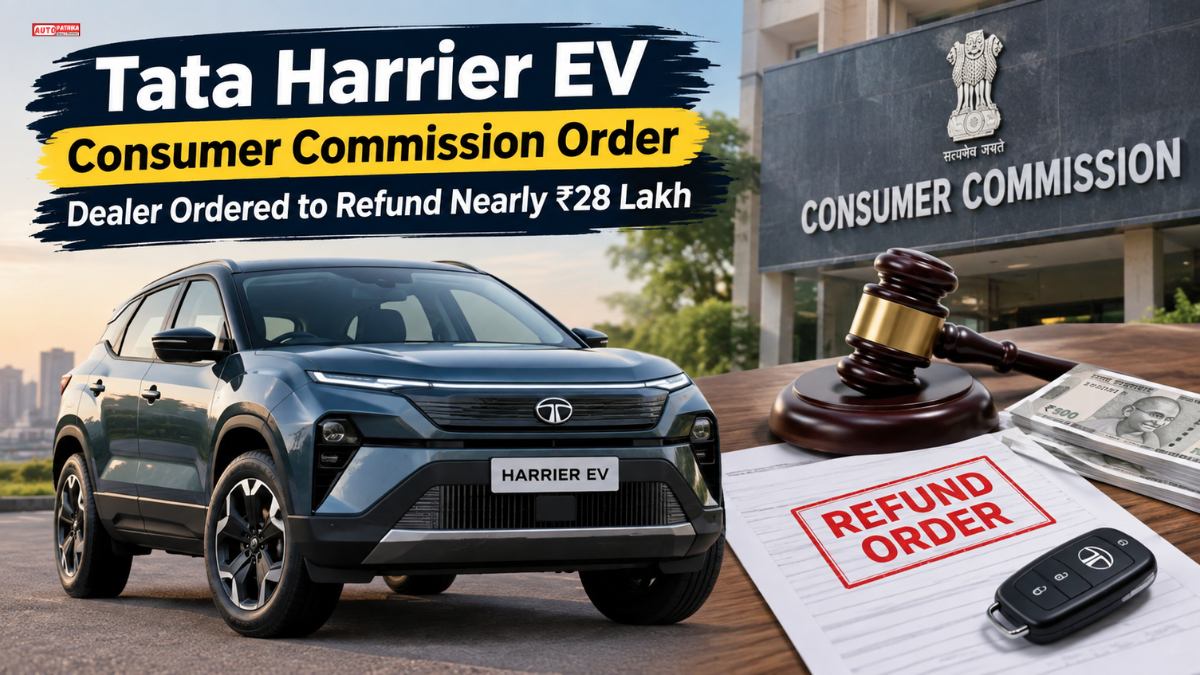
Tata Harrier EV Consumer Commission Order: Buying a new electric SUV is supposed to bring excitement, not repeated trips to the service centre. But a recent consumer case involving a Tata Harrier EV has brought attention to exactly this kind of situation.
In the latest Tata Harrier EV consumer commission order, the Hyderabad District Consumer Commission has directed Tata Select Motors to take back the electric SUV and refund the vehicle’s cost after the owner reportedly faced repeated problems with the smart key, locking system and vehicle starting.

The order was pronounced on September 7, 2026, and has quickly attracted attention because the vehicle was purchased for nearly ₹28 lakh and the reported problems allegedly continued despite multiple service visits.
What happened with the Tata Harrier EV?
According to the case details, the customer purchased a Tata Harrier EV Empowered+ 75 APC on August 1, 2025. The total amount paid for the vehicle was around ₹27.98 lakh, including applicable taxes and other charges.
The trouble reportedly began only a few days after delivery.
The owner complained that the smart key was not being recognised properly and that the vehicle sometimes could not be locked or unlocked. There were also complaints related to starting the EV and selecting the drive mode.
What made the situation more serious was that these issues reportedly did not disappear after the vehicle was taken to the authorised service centre.
The service records mentioned repeated complaints involving locking and unlocking, starting problems, the EV not starting and drive-mode malfunction.
That repeated pattern eventually became an important part of the consumer complaint.
Why did the consumer commission intervene?
The owner approached the consumer commission after allegedly experiencing recurring issues with the vehicle despite service and repair attempts.
The dealer, Tata Select Motors, contested the complaint. It argued that it was an authorised dealer and not the manufacturer. The dealer also reportedly stated that the software-related issue had been addressed and that the locking system had been replaced under warranty.
However, the commission considered the repeated complaints and service records while deciding the matter.
The Tata Harrier EV consumer commission order ultimately went in favour of the consumer, with the commission directing the dealer to take back the vehicle and provide a refund subject to the depreciation calculation mentioned in the order.
How much refund was ordered?
The vehicle’s total consideration was reported at around ₹27.98 lakh.
However, the commission did not simply order the entire amount to be refunded without adjustment. The order applied 10 percent depreciation to the base vehicle price.
The base vehicle price mentioned in the case was approximately ₹26.64 lakh. Taxes and certain other components were treated separately according to the order.
The consumer must return the vehicle and cooperate with the necessary registration-related formalities.
In addition to the refund direction, the commission also awarded ₹50,000 as compensation for deficiency in service and mental agony.
A further ₹15,000 was awarded towards litigation costs.
Dealer given 45 days to comply
The commission has given the dealer 45 days to comply with the directions.
If the dealer fails to make the payment within the prescribed period, the refund amount will attract 9 percent annual interest from September 7, 2026, until the date of payment, as stated in the order.
This is one of the key points that makes the latest Tata Harrier EV consumer commission order significant for the customer involved.
Does this mean every Tata Harrier EV has a problem?
Not necessarily. This is an important distinction. The order relates to a specific consumer complaint involving one particular vehicle and the problems reported in that case. It should not be interpreted as a finding that every Tata Harrier EV suffers from the same issues.
Modern EVs rely heavily on electronics, software, sensors and interconnected systems. When something goes wrong, identifying whether the issue is a hardware fault, software problem or an interaction between multiple systems can sometimes be complicated.
That is why proper service documentation can become extremely important.
What can EV owners learn from this case?
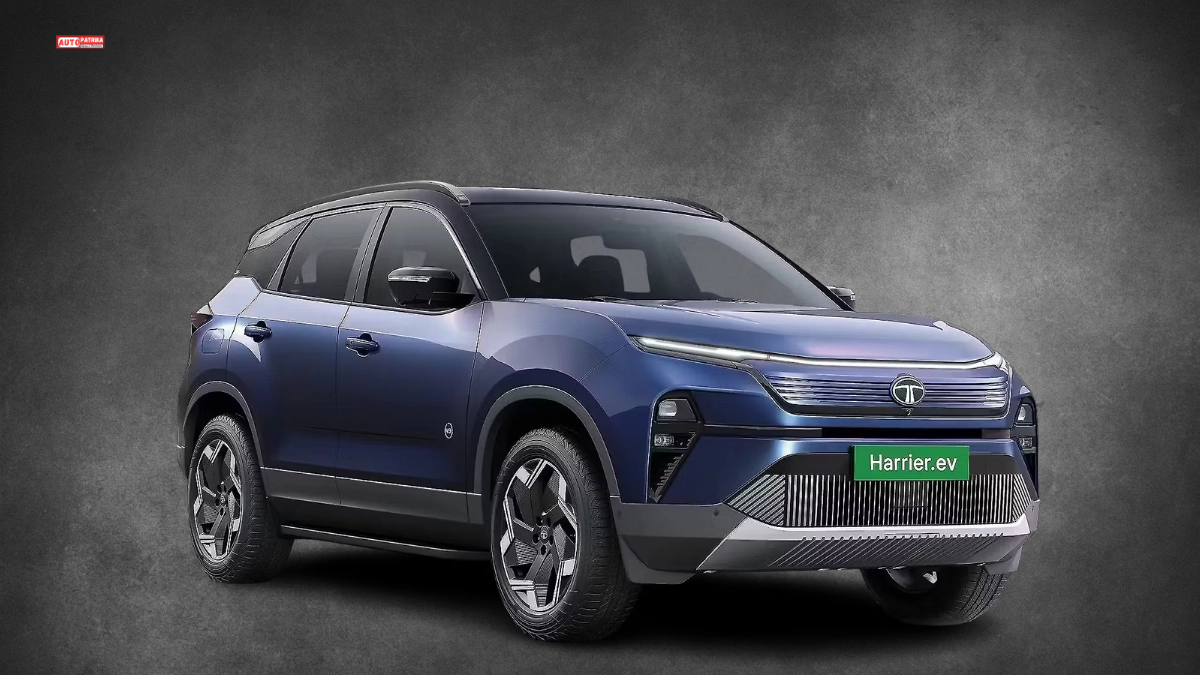
Perhaps the biggest takeaway from the Tata Harrier EV consumer commission order is not simply the refund amount.
It is the importance of keeping a proper record when a vehicle repeatedly develops the same problem.
Owners dealing with recurring issues should keep copies of service invoices, job cards, emails, messages and written complaints. If a problem returns several times, documenting each visit can help establish a clear history of what happened and what repairs were attempted.
For an expensive vehicle, that paperwork can become surprisingly important if the dispute later reaches a consumer forum.
The bigger picture
The Tata Harrier EV is part of a new generation of electric SUVs where technology plays a much bigger role than it did in conventional cars.
Features such as smart keys, connected systems, electronic locking, drive modes and software-controlled functions can make the driving experience more convenient. At the same time, failures in these systems can become frustrating because several basic functions depend on electronics working correctly.
The latest Tata Harrier EV consumer commission order therefore offers an interesting reminder for both manufacturers and customers: when a problem keeps coming back, simply repairing the vehicle once may not always be enough.
For customers, the case also shows why repeated complaints should be properly documented rather than handled only through verbal conversations.
Tata Harrier EV Consumer Commission Order Final Verdict
The Hyderabad consumer commission’s decision has put the spotlight on a Tata Harrier EV owner who reportedly faced repeated electronic and starting-related problems after buying the SUV.
The dealer has been directed to take back the vehicle, provide the applicable refund after depreciation and pay compensation and litigation costs.
At the same time, this should be viewed as a decision concerning the individual consumer dispute rather than proof of a widespread defect across the Tata Harrier EV range.
For anyone dealing with repeated problems in a new vehicle, however, the case carries a simple message: keep every complaint, service visit and repair record in writing.