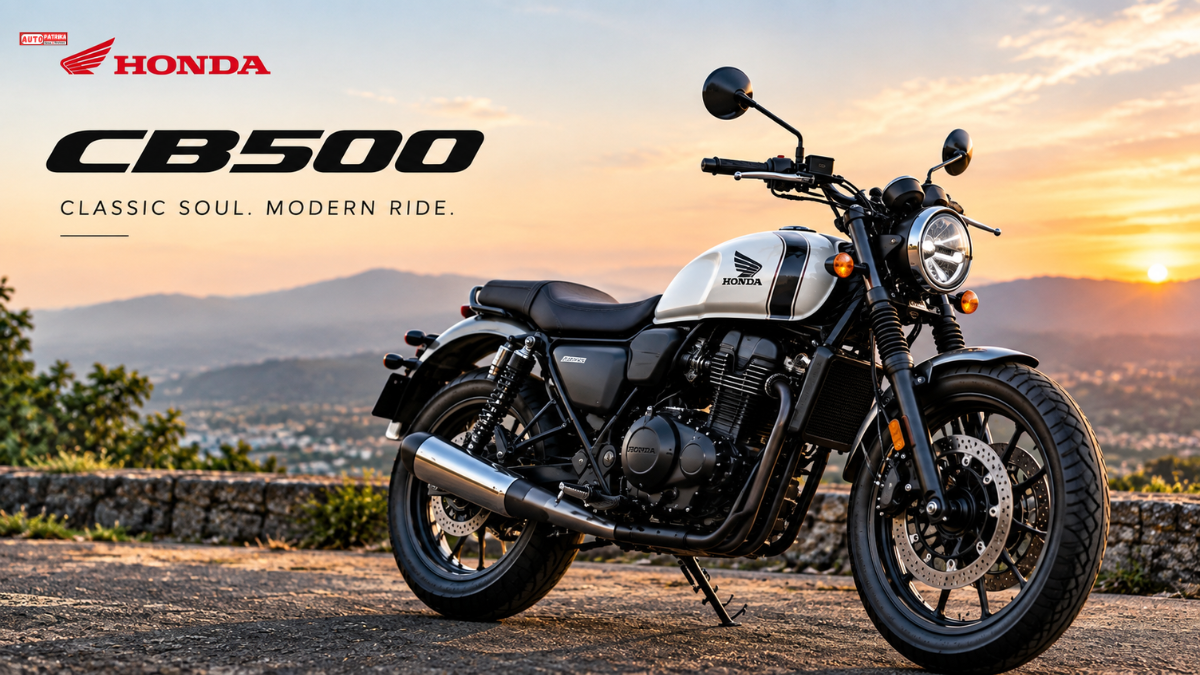
Honda CB500 launched in India at ₹2.75 lakh with a 501cc single-cylinder engine. Check price, variants, mileage, features, specifications and rivals.
For years, the 500cc badge has meant different things in different motorcycle markets. But Honda’s new CB500 takes a very different route. Instead of chasing outright power with a twin-cylinder setup, Honda has gone back to the basics with a big 501cc single-cylinder engine, classic roadster styling and a strong focus on everyday riding.

Launched in India at ₹2.75 lakh, the CB500 is an interesting addition to Honda’s lineup because it sits in a space that has been largely empty since the old 500cc Royal Enfield motorcycles disappeared. With 28hp and 43.3Nm of torque, the numbers may not look dramatic on paper, but the character of a large single-cylinder motorcycle is about much more than peak power.

And that is what makes the CB500 worth talking about. It brings the visual simplicity of a classic motorcycle together with modern touches such as Honda Selectable Torque Control, a slipper clutch and RoadSync connectivity. For riders in India and enthusiasts watching Honda’s latest moves from other markets, the bigger question is simple: can this new big-single formula offer the right balance of character, comfort and everyday usability?
Honda CB500 Launched in India: Price, Launch Date, Mileage, 501cc Engine, Features and Rivals
For riders who have been waiting for something bigger than a 350cc retro motorcycle but don’t necessarily want to jump straight into a 650cc twin-cylinder bike, Honda now has a new answer. The Honda CB500 has officially launched in India, and it is quite different from what its name might suggest.
Instead of using the 471cc parallel-twin engine found in Honda’s international CB500 family, the India-spec motorcycle gets a brand-new 501cc single-cylinder, air-cooled engine with an oil cooler. Honda has positioned it as a Heritage Roadster, combining classic CB styling with modern electronics and a torque-focused riding character.
The motorcycle was unveiled in India in July 2026 and has now officially gone on sale. Prices start at ₹2.75 lakh ex-showroom, making the CB500 one of the more interesting new motorcycles in India’s middleweight retro segment. But there is one question many riders will have: does this new 501cc Honda make more sense than spending extra on a 650cc motorcycle? Let’s take a closer look.
Honda CB500 2026: Quick Highlights
| Specification | Honda CB500 |
|---|---|
| Launch Date | September 21, 2026 |
| Starting Price | ₹2.75 lakh |
| Top Price | ₹3.02 lakh |
| Engine | 501cc single-cylinder |
| Cooling | Air-cooled with oil cooler |
| Power | 27.6–28 bhp |
| Torque | 43.3 Nm |
| Gearbox | 5-speed |
| Fuel Type | Petrol |
| Front Wheel | 19-inch |
| Rear Wheel | 17-inch |
| Variants | Alloy, Spoke, Spoke with Stripe |
| ABS | Dual-channel |
| Traction Control | Honda HSTC |
| Connectivity | Honda RoadSync |
| Manufacturing | India |
Honda’s reported output figures are around 27.6 bhp and 43.3 Nm, while Autocar India reports 28hp and 43.3Nm.
Honda CB500 Launch Date in India
The Honda CB500 launched in India on September 21, 2026. The motorcycle was initially showcased on July 24 as part of Honda Motorcycle & Scooter India’s 10-product India portfolio. At the time, Honda confirmed that the motorcycle would be manufactured in India and offered in three versions.
Bookings are now open through Honda’s BigWing dealerships. This local manufacturing strategy is important because the CB500 falls into a higher GST bracket for motorcycles above 350cc. Local production helps Honda keep the motorcycle’s introductory price considerably below some of the larger 650cc motorcycles.
Honda CB500 Price in India
The Honda CB500 is available in three variants.
| Variant | Ex-showroom Price |
|---|---|
| CB500 Alloy | ₹2.75 lakh |
| CB500 Spoke | ₹2.99 lakh |
| CB500 Spoke with Stripe | ₹3.02 lakh |
These prices are reported for Bengaluru. The Spoke version gets cross-spoke tubeless wheels, while the top variant adds exclusive colours and graphics.
The entry-level Alloy variant is therefore the most affordable way into Honda’s new 500cc roadster. The top-spec Spoke with Stripe costs only around ₹2,000 more than the regular Spoke version, mainly bringing additional styling and graphics.
501cc Single-Cylinder Engine
This is the part that makes the Honda CB500 genuinely interesting.
The India-spec motorcycle gets a 501cc single-cylinder engine with air cooling and an oil cooler.
It produces approximately:
- Power: 27.6–28 bhp
- Torque: 43.3 Nm
- Transmission: 5-speed manual
- Cylinder: Single
- Fuel: Petrol
Honda’s official India portfolio describes the engine as a 501cc single-cylinder air-cooled motor with an oil cooler, developed around a torque-rich riding experience. The engine is not chasing a huge peak-power number.
Instead, Honda appears to have focused on usable low- and mid-range torque. That should make the CB500 feel relaxed in normal city riding while giving it enough muscle for highway cruising.
Why a Single-Cylinder 501cc Engine?
At first, the idea of a 500cc single-cylinder motorcycle may seem unusual.
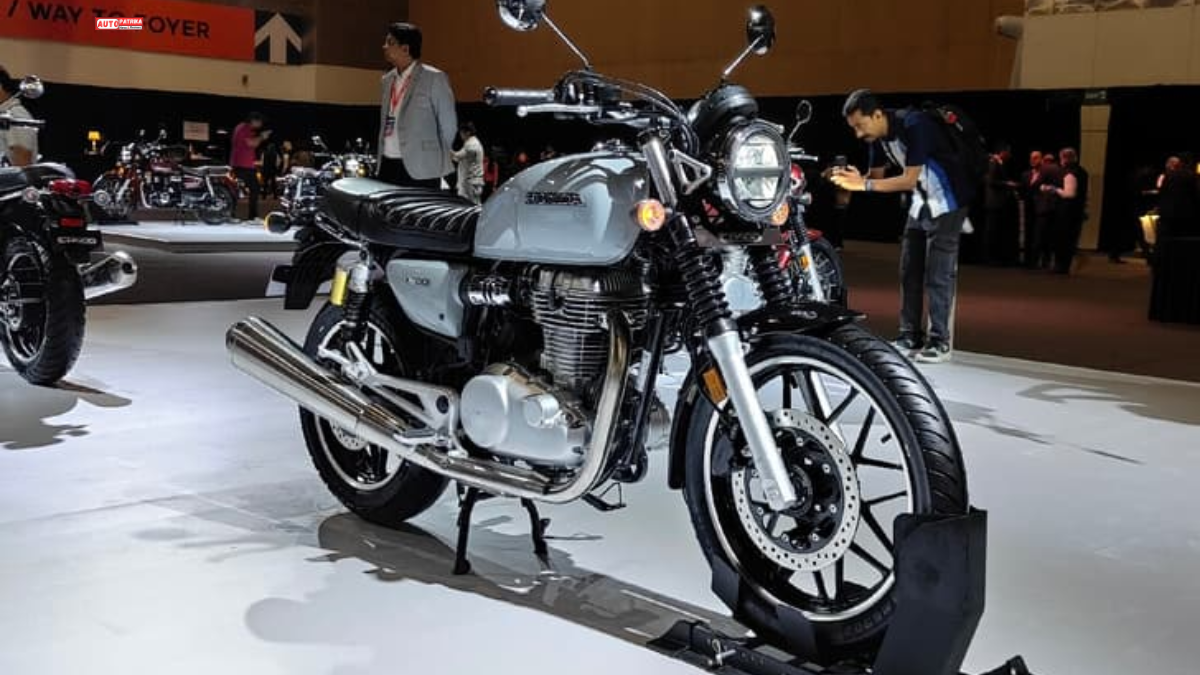
But that is exactly what makes the CB500 different.
India previously had a strong market for large single-cylinder motorcycles, particularly Royal Enfield’s 500cc UCE-powered range. Those motorcycles were eventually discontinued, leaving a noticeable gap between 350cc singles and larger 650cc motorcycles.
Honda is now stepping into that space.
The CB500 essentially brings back the idea of a large, torque-focused single-cylinder roadster, but with modern electronics and a contemporary chassis.
It also means the riding experience should be quite different from a 650cc parallel-twin motorcycle.
Honda CB500 Performance
With around 28 bhp and 43.3 Nm, the CB500 isn’t designed as a high-performance street bike. Its numbers tell a different story.
The relatively modest power figure is paired with a strong torque output for a single-cylinder engine. That combination should make the motorcycle feel relaxed rather than aggressive. For everyday riders, this can be useful.
You don’t need to constantly rev the engine to make progress. In city traffic, the strong torque should help with quick overtakes and easy acceleration. On highways, the motorcycle should be comfortable at cruising speeds, although riders looking for strong high-speed performance may still prefer a twin-cylinder 650cc machine.
Honda CB500 Mileage
This is one area where buyers should be careful with online claims. Honda has not clearly published an official certified mileage figure for the CB500 yet. Because the motorcycle uses a new 501cc single-cylinder engine, quoting a specific real-world mileage number before independent testing would be premature.
Actual fuel efficiency will depend on:
- Traffic conditions
- Riding style
- Average speed
- Rider and luggage weight
- Road conditions
- Engine running-in period
The single-cylinder architecture and torque-focused engine could help the CB500 deliver reasonable efficiency for its displacement, but the actual figure should be confirmed after official certification and real-world testing.
Honda CB500 Design
The CB500 follows Honda’s modern-retro roadster philosophy.
The motorcycle has a round headlamp, sculpted fuel tank, upright riding position and clean bodywork.
Honda says the motorcycle takes inspiration from its heritage CB models, including the legendary CB750.
That gives the CB500 a traditional motorcycle silhouette without making it look old-fashioned.
The overall design should appeal to riders who want a motorcycle with road presence but don’t necessarily want the aggressive appearance of a streetfighter.
The larger engine also gives the bike a more substantial visual presence than Honda’s CB350 range.
19-inch Front Wheel and 17-inch Rear Wheel
The CB500 uses a 19-inch front wheel and 17-inch rear wheel. This setup gives the motorcycle a slightly different stance compared with conventional street roadsters.
The larger front wheel can help with stability and confidence on uneven roads, while the 17-inch rear wheel maintains a balance between handling and everyday usability. The motorcycle is offered with alloy wheels on the entry variant, while higher versions get cross-spoke tubeless wheels.
Honda CB500 Features
Honda has not treated the CB500 as a bare-bones retro motorcycle.
It gets a useful set of modern features, including:
- Honda Selectable Torque Control (HSTC)
- Assist and slipper clutch
- Honda RoadSync connectivity
- Analogue-digital instrument console
- Full-LED lighting
- Dual-channel ABS
- Disc brakes at both ends
- Cross-spoke tubeless wheels on higher variants
These features help bridge the gap between traditional styling and modern motorcycle expectations.
Honda Selectable Torque Control
HSTC is Honda’s traction-control system.
Its inclusion is notable because the CB500 is positioned as a premium middleweight motorcycle rather than a simple retro bike.
For riders dealing with wet roads or changing grip conditions, electronic torque management can provide an additional layer of assistance.
Assist and Slipper Clutch
The CB500 also gets an assist and slipper clutch.
The assist mechanism helps make clutch operation lighter, while the slipper function is designed to reduce the effect of aggressive downshifts on the rear wheel.
For daily traffic and enthusiastic riding, this can make the gearbox experience smoother.
Honda RoadSync
Honda RoadSync adds smartphone connectivity to the motorcycle.
This allows compatible riders to access connected functions through their phone while keeping the motorcycle’s cockpit relatively clean.
It is another example of Honda mixing classic styling with modern technology.
Honda CB500 Safety
Safety equipment includes dual-channel ABS, with disc brakes at both ends.
The motorcycle also gets Honda Selectable Torque Control, which adds electronic assistance when available traction becomes limited.
The combination of ABS and traction control gives the CB500 a more modern safety package than the old-school large singles that once occupied this space.
Honda CB500 Variants
Honda has created three versions of the motorcycle.
CB500 Alloy
This is the entry-level version.
It gets alloy wheels and starts at ₹2.75 lakh ex-showroom.
For riders who care more about the motorcycle itself than premium wheel styling, this could be the straightforward option.
CB500 Spoke
The middle variant costs ₹2.99 lakh.
It gets cross-spoke tubeless wheels, giving the motorcycle a more premium and traditional appearance.
CB500 Spoke with Stripe
The range-topping version costs ₹3.02 lakh.
Along with the spoke-wheel setup, it receives exclusive colours and graphics.
Honda CB500 vs Honda CB350
The CB500 sits above the CB350 family in Honda’s India lineup.
The difference is not just engine capacity.
The CB500 brings a significantly larger 501cc engine and stronger torque output, while retaining the retro roadster character associated with Honda’s modern CB range.
For a rider moving up from a CB350, the CB500 offers more displacement and road presence.
At the same time, the price jump is significant.
The updated CB350 range starts around ₹1.95 lakh, while the CB500 begins at ₹2.75 lakh.
So the CB500 is aimed at buyers who specifically want the extra engine capacity and a larger motorcycle experience.
Honda CB500 vs Harley-Davidson X440
The Harley-Davidson X440 is one of the motorcycles the CB500 will naturally be compared with.
The X440 uses a smaller engine, while the Honda offers 501cc displacement and 43.3 Nm of torque.
The two bikes also approach retro-roadster design differently.
The Harley focuses strongly on its muscular roadster character, while the Honda takes a cleaner heritage-inspired approach.
The final choice will depend on price, riding position, engine character and the buyer’s preference for brand and design.
Honda CB500 vs Royal Enfield Interceptor 650
The Royal Enfield Interceptor 650 is another important rival.
The Interceptor uses a 648cc parallel-twin engine and produces substantially more peak power than the Honda.
However, the Honda CB500 is positioned below the Royal Enfield 650 twins in price. Autocar India notes that the Interceptor 650 range starts at ₹3.39 lakh ex-showroom Chennai, while the CB500 starts at ₹2.75 lakh.
This makes the Honda interesting for riders who want a larger-capacity motorcycle without moving directly into the higher-priced 650cc segment.
Honda CB500 vs BSA Gold Star 650
The BSA Gold Star 650 is another natural comparison because it also follows the classic British-inspired single-cylinder formula.
The BSA uses a much larger 652cc engine, while Honda’s new motorcycle uses a 501cc unit.
The CB500’s appeal comes from its combination of Honda’s modern technology, local manufacturing, HSTC, RoadSync and a new large-capacity single-cylinder engine.
What Makes Honda CB500 Different?
The biggest attraction isn’t simply the 501cc badge.
It is the combination of:
500cc-class single-cylinder engine + retro styling + modern electronics + competitive pricing.
That combination is relatively unusual in the current Indian motorcycle market.
Honda is not trying to beat a 650cc twin on outright performance.
Instead, it is creating a motorcycle with its own personality.
The engine should feel more characterful and torque-focused than a small-capacity commuter, while the overall motorcycle remains easier to understand than a high-performance middleweight.
Honda CB500 Pros and Cons
Pros
- Unique 501cc single-cylinder engine
- Strong 43.3 Nm torque
- Retro roadster design
- HSTC traction control
- Assist and slipper clutch
- Honda RoadSync connectivity
- Dual-channel ABS
- Three variants
- Cross-spoke tubeless wheels on higher variants
- Made in India
- Starting price below many 650cc rivals
Cons
- Peak power is modest for a 500cc motorcycle
- Official mileage figure is still awaited
- 5-speed gearbox instead of a 6-speed unit
- Top variants cross the ₹3 lakh mark
- Real-world performance needs independent testing
Is Honda CB500 Worth Waiting For?
There is actually nothing left to wait for in terms of the launch.
The Honda CB500 is already officially on sale in India, with bookings open through BigWing dealerships.
The more important question for buyers is which variant makes sense.
The Alloy version gives access to the motorcycle at ₹2.75 lakh, while the Spoke versions add premium wheel designs and styling.
For someone who wants the classic look, the higher variants may have more visual appeal.
For someone who simply wants the new 501cc Honda experience at the lowest price, the Alloy version is the obvious entry point.
Honda CB500 2026 FAQs
What is the Honda CB500 price in India?
The Honda CB500 starts at ₹2.75 lakh ex-showroom for the Alloy variant. The range goes up to ₹3.02 lakh for the Spoke with Stripe variant.
When was the Honda CB500 launched in India?
Honda launched the CB500 in India on September 21, 2026.
What engine does the Honda CB500 use?
The India-spec CB500 uses a 501cc single-cylinder, air-cooled engine with an oil cooler.
How much power does Honda CB500 produce?
The engine produces around 27.6–28 bhp, depending on the published specification source.
What is the Honda CB500 torque?
The Honda CB500 produces 43.3 Nm of peak torque.
What is the Honda CB500 mileage?
Honda has not yet clearly published an official certified mileage figure for the CB500. Real-world mileage will depend on riding conditions and riding style.
Is the Honda CB500 a twin-cylinder motorcycle?
No. The India-spec CB500 uses a 501cc single-cylinder engine. This is different from the parallel-twin CB500 models sold in international markets.
Does Honda CB500 get traction control?
Yes. The CB500 gets Honda Selectable Torque Control (HSTC).
Does Honda CB500 have ABS?
Yes. The motorcycle gets dual-channel ABS.
Which bikes compete with Honda CB500?
The CB500 can be compared with motorcycles such as the Harley-Davidson X440, Royal Enfield Interceptor 650 and BSA Gold Star 650, although their engine configurations and positioning are different.
Is Honda CB500 manufactured in India?
Yes. Honda has confirmed that the CB500 is part of its Made-in-India portfolio, with local manufacturing intended to improve competitiveness.
Final Thoughts
The Honda CB500 is an unusual motorcycle for the Indian market, and that’s exactly what makes it interesting. It brings back the idea of a large-capacity single-cylinder roadster, but this time with modern technology such as HSTC, RoadSync, dual-channel ABS and an assist-and-slipper clutch.
The 501cc engine produces around 28 bhp and 43.3 Nm, so Honda isn’t chasing outright performance. Instead, the motorcycle is built around torque, road presence and a relaxed retro riding experience. With prices starting at ₹2.75 lakh, the CB500 also creates a new space between Honda’s 350cc motorcycles and the more expensive 650cc twins.
For riders who want something different from the usual 350cc and 650cc choices, the Honda CB500 could be one of the most distinctive new motorcycles of 2026.
Read More
Royal Enfield Classic 350 White Launched at ₹2.24 Lakh: New Signature White Colour
Tesla Roadster Is Coming Back : Price, Launch Date, 620-Mile Range 1.9-Second Acceleration
Hyundai Bayon 2026: Expected Price, Launch Date, Engine & Features
Tata Harrier EV Consumer Commission Order: Dealer Ordered to Refund ₹27.98 Lakh